
Knowledge Base/Protein
WPC vs WPI vs WPH
WPC, WPI and WPH are three whey architectures. They differ in protein percentage, lactose, cost, flavour work and how you position the tub. They are not three speeds of the same powder.
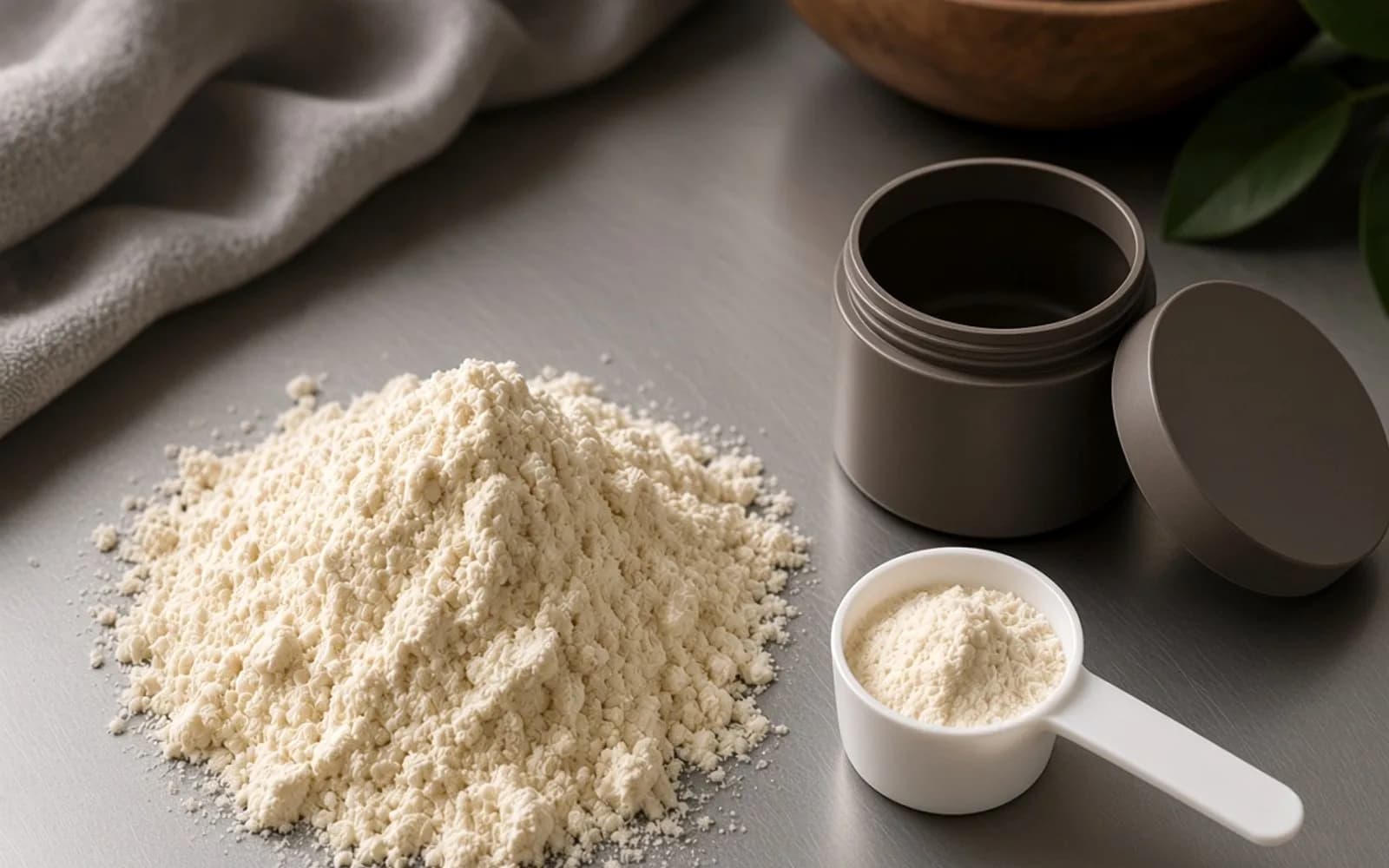
WPC (whey protein concentrate), WPI (whey protein isolate) and WPH (whey protein hydrolysate) are three ways to process whey. Concentrate keeps more of the dairy solids. Isolate takes protein further and leaves more lactose and fat behind. Hydrolysate is whey that has been cut into shorter peptides. That last step changes taste and cost more than it changes the story you should print on a sports tub.
For a brand owner the useful differences are protein percentage, flavour latitude, lactose, price per kilo and how honest the front of pack can be. We will not claim that hydrolysate “absorbs instantly” or that isolate is automatically a better training protein. Those lines do not belong on a European sports nutrition label, and they are a poor brief for manufacturing.
WPC: the everyday shake
WPC is the mainstream architecture. Typical protein on the unflavoured powder often lands in the high sixties or low eighties. It drinks creamy. Chocolate, vanilla and cookie flavours have somewhere to sit. Cost per serving stays in a range a gym customer expects. Lactose is higher than isolate. That matters if you sell a “low lactose” story. It matters less if you sell a thick daily shake.
Most first protein SKUs should be WPC-led. If the brief is “better than supermarket, not a boutique isolate”, concentrate is the material. Instantising and flavour still make or break the tub. A cheap WPC that clumps in cold water is not a value product. It is a return.
WPI: higher protein, drier drink
WPI is chosen when the nutrition table needs a higher protein percentage, when lactose must come down, or when you want a lighter, more “athletic” mouthfeel. Clear acidic whey drinks almost always need isolate. A creamy chocolate isolate is possible. It needs more flavour work than the same chocolate on WPC, because there is less dairy fat and less milk-solid sweetness to hide behind.
Cost per kilo is higher. Cost per gram of protein can still look acceptable if the serving is smaller. Shoppers compare grams in the scoop, not only the percentage on the side panel. An isolate that delivers 25 g in 30 g of powder is a different SKU from a concentrate that delivers 25 g in 35 g. Say which comparison you care about before we lock the blend.
WPH: specialist, not a default
Hydrolysate is a specialist raw material. It costs more. It often tastes bitter or savoury. Some brands want a small cut in a WPI blend for a performance SKU or an exclusive line. A 100 percent hydrolysate tub is a niche product with a flavour problem and a price problem. It is not the next step after isolate for every catalogue.
Degree of hydrolysis changes bitterness. Higher hydrolysis is not “better”. It is a different tasting powder. If the brief only says “hydro for absorption”, we will send it back. Give a positioning reason (exclusive SKU, a named material, a mix with isolate) and a cost ceiling. Then hydrolysate is a tool. Otherwise it is a line on a competitor label that you do not need.
Choosing for the line
WPC for the daily flavoured shake. WPI when the label or the mouthfeel needs isolate, including clear drinks. WPH as a cut or a niche SKU when budget and flavour work are real. Blends of WPC and WPI are common. They are a way to hit a protein target without paying isolate on every gram. Pack is a tub or pouch from 300 finished units per product and flavour. Sticks start at 5,000 finished units and usually want a simpler, more soluble architecture.
Configure protein type, grams per serving, flavour and pack in the protein builder. We quote on a named whey grade, not on a marketing synonym. If isolate is the story, isolate leads the ingredient list. If concentrate is the honest drink, print that and spend the money on flavour that people finish.
Related products
Related articles
Protein
MPI vs MPC
Milk protein isolate (MPI) and milk protein concentrate (MPC) are cost-efficient milk systems for shakes. They are not a downgrade from whey. They are a different protein architecture, often blended with whey.
6 min
Protein
How protein blends are formulated
A protein blend mixes two or more protein sources so one product can hit a protein target, a cost band, a texture and a flavour that a single source often cannot. The ratio is a commercial choice, not a habit copied from another tub.
7 min