
Knowledge Base/Protein
How protein blends are formulated
A protein blend mixes two or more protein sources so one product can hit a protein target, a cost band, a texture and a flavour that a single source often cannot. The ratio is a commercial choice, not a habit copied from another tub.
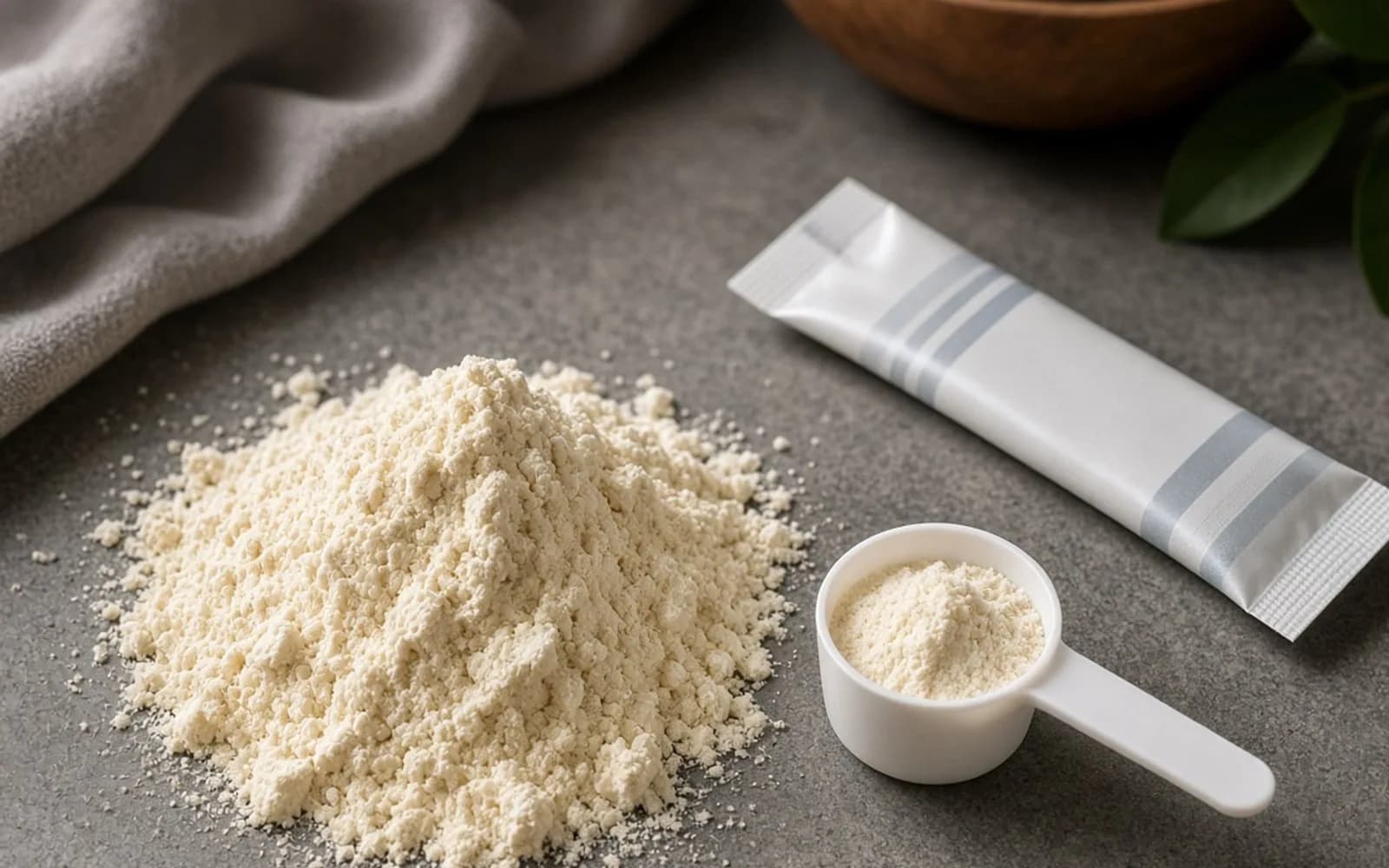
A protein blend is a powder that uses more than one protein source in a set ratio. Brands do this so the finished shake can meet a protein gram target, a price, a mouthfeel and a flavour in one serving. A single source can do some of that work. It rarely does all of it at the same time.
The mix is written against the product, not against a competitor label. Protein percentage, serving size, dairy or plant story, and how the powder behaves in a shaker all sit in the same decision. Get those wrong and you either overspend on isolate, or you sell a tub that tastes thin and mixes poorly.
Why brands blend at all
Whey protein concentrate (WPC) usually brings flavour, creaminess and a workable cost. Whey protein isolate (WPI) raises protein on the label and cuts lactose. Hydrolysed whey (WPH) is a specialist material: higher cost, a more bitter or savoury note, and a positioning story that isolate does not carry. Milk protein concentrate or isolate (MPC / MPI) keeps a milk system in the formula and can hold cost when the brief wants dairy protein without sending every gram through whey isolate.
Plant systems follow the same logic. Pea protein often leads a vegan blend because it mixes and flavours more easily than many other pulses. Rice, fava or pumpkin protein can fill amino gaps or change texture. None of those choices is decoration. Each one moves protein percentage, sediment in the glass, and the flavour work you still have to pay for.
Architectures you actually see
A daily gym shake often leads with WPC and uses a smaller share of WPI or MPI to lift protein per serving without making the tub a full isolate product. A leaner “high protein” SKU may invert that: isolate first, concentrate for mouthfeel. A milk-forward blend uses MPI or MPC with whey so the shake stays creamy and the cost per kilo stays honest. A recovery or “matrix” product may add casein or micellar casein for a thicker drink and a slower emptying story. That is still a blend. It is not a different category of chemistry.
WPI plus a small WPH cut is a performance SKU, not a default. Plant-only blends are a different manufacturing job: higher flavour load, more anti-caking and often a larger serving to hit the same protein grams. Mixing pea with a little rice is common. Mixing five plant sources because a moodboard listed them is how you get grit, foam and a formula that nobody can cost.
Protein percentage, serving and pack
Protein on the nutrition table is a percentage of the powder, and grams in the serving people actually scoop. A 30 g serving at 80 percent protein is not the same commercial product as a 40 g serving at 70 percent. Flavour, sweetener and instantising agents all dilute protein. So does a large milk-protein share if you chase creaminess. State the grams you want in the glass, then the powder weight you will print. We work backwards to the blend.
Pack is usually a tub or a pouch. Both start at 300 finished units per product and flavour. Stick packs are a different job: 5,000 finished units, a fixed dose, and less room for a heavy blend that needs a large scoop. Decide serving and pack with the formula. Do not lock a 35 g isolate-style serving into a 10 g stick and hope the numbers still read.
Texture, flavour and solubility
Concentrate drinks creamier than isolate. Isolate drinks lighter and can taste drier. Hydrolysate often needs more flavour cover. Milk proteins thicken and can leave a slight film. Plant proteins sediment if the grind and instantising are weak. Those are manufacturing facts, not marketing adjectives. A chocolate WPC blend and a clear acidic WPI drink are different products. They should not share a formula brief.
Solubility is checked in the water volume you print on pack, at the temperature people will use. A blend that looks fine in a lab beaker of warm water can clump in a cold 300 ml shaker. Instantised whey helps. Lecithin type and dose matter. So does the order of addition in the mixer. Flavour development starts after the protein ratio is stable. Changing the blend after the flavour is locked is how projects slip.
Amino profile and positioning
Whey is leucine-rich relative to many plant proteins. Milk protein brings casein-side amino acids with the whey fraction already in the milk. A pea and rice mix is often used so the finished amino table looks closer to a complete dairy protein. That table is a formulation check. It is not a medical claim, and it is not a reason to stuff five branded amino add-ons into a shake that already has 24 g of protein.
Positioning should match the blend. If the tub says isolate, isolate should lead the ingredient list in a way you can defend. If the story is “everyday whey”, a WPC-led blend is usually the honest product. If the story is plant, say which plants and why. Shoppers notice when the front of pack talks like a boutique isolate and the back reads like a concentrate blend with a dusting of WPI.
When a single source is better
Do not blend because blends sound premium. A clean WPC 80 chocolate, a straight WPI unflavoured, or a single-source pea isolate can be the sharper SKU. Blend when you need a protein target that one material misses, when cost forces a milk cut, when plant amino balance needs a second source, or when mouthfeel of isolate alone is too thin for the brand. If you cannot name that reason in one sentence, start with one source.
A workable brief names dairy or plant, the protein grams per serving, the powder weight, a cost band if you have one, the mouthfeel (creamy shake versus light), and the pack. We map sources to that before flavour work. Configure the blend in the protein builder, then we quote manufacturing on a specification you can stand behind.
Related products
Related articles
Protein
WPC vs WPI vs WPH
WPC, WPI and WPH are three whey architectures. They differ in protein percentage, lactose, cost, flavour work and how you position the tub. They are not three speeds of the same powder.
6 min
Protein
MPI vs MPC
Milk protein isolate (MPI) and milk protein concentrate (MPC) are cost-efficient milk systems for shakes. They are not a downgrade from whey. They are a different protein architecture, often blended with whey.
6 min