
Knowledge Base/Protein
MPI vs MPC
Milk protein isolate (MPI) and milk protein concentrate (MPC) are cost-efficient milk systems for shakes. They are not a downgrade from whey. They are a different protein architecture, often blended with whey.
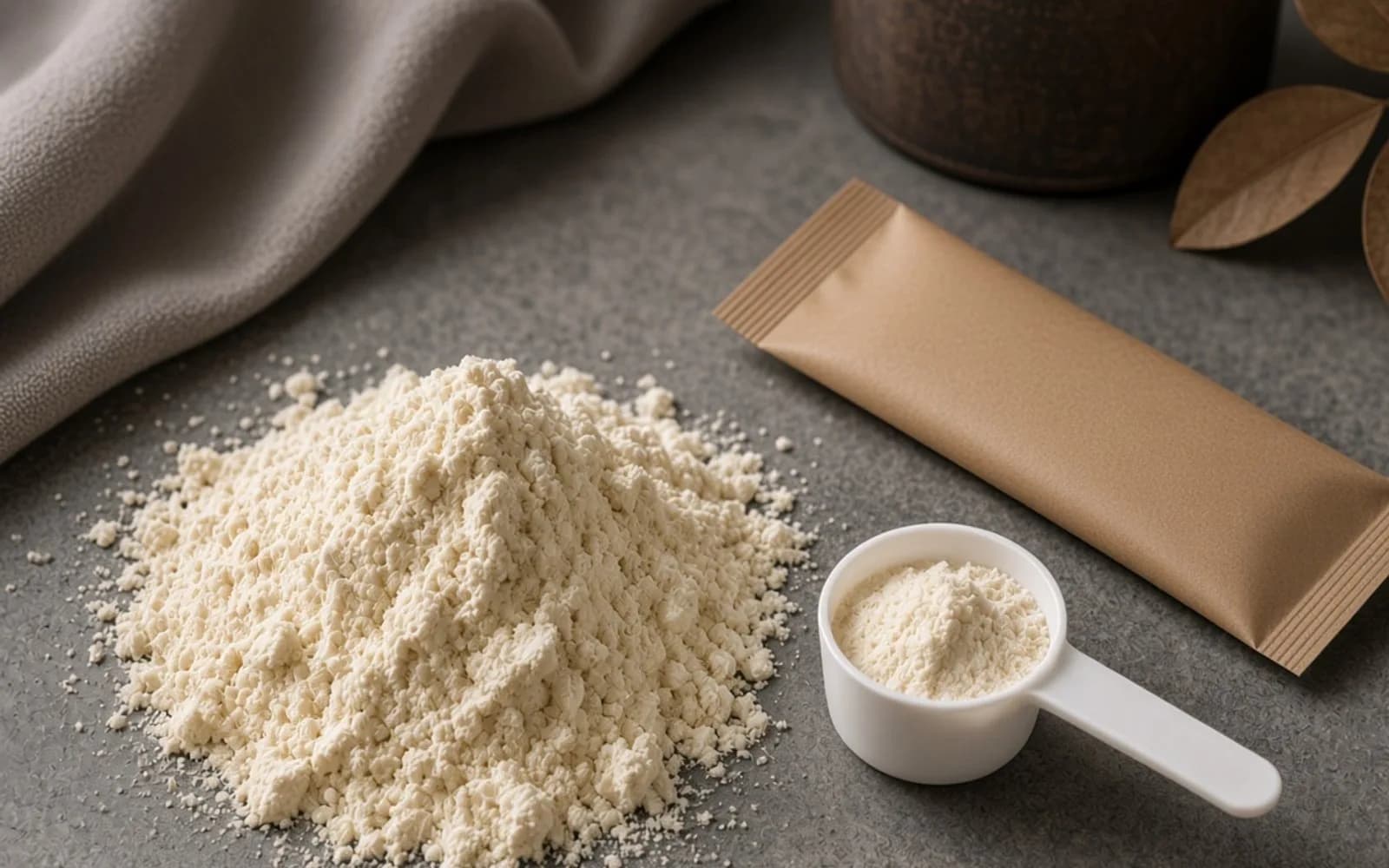
MPC (milk protein concentrate) and MPI (milk protein isolate) are proteins made from skim milk. They keep the natural mix of casein and whey that milk already has, at a higher protein percentage than milk powder. Concentrate sits lower on protein and higher on lactose and minerals. Isolate sits higher on protein and lower on lactose. Neither is a cheap substitute for “real” whey. They are milk systems with their own texture and cost.
Brands use them when the shake should taste like milk, when cost per gram of protein must stay sharp, or when a whey-only isolate would drink too thin for the price the shelf will bear. A milk protein SKU can stand alone. More often it is blended with WPC or WPI so the drink still mixes quickly and the amino table still looks like a sports shake.
What actually differs
Protein percentage is the first number. MPC grades are sold at several protein levels. MPI is the high-protein end of that milk family. Higher protein means less lactose and usually a higher kilo price. It does not automatically mean a better shake. A mid-protein MPC in a flavoured everyday tub can be the more drinkable product. An MPI earns its place when you need the nutrition table to look closer to an isolate without leaving the milk system.
Texture is the second number. Milk proteins thicken. They can leave a slight film and a slower mix than instant whey. That is useful in a creamy vanilla. It is a problem in a light fruity water-style drink. Casein in the milk mix also changes how the shake sits in the glass compared with whey alone. If you want a fast, thin post-gym drink, lead with whey and use milk protein as a cost and creaminess cut. If you want a night or meal-adjacent shake, milk protein can lead.
Blending with whey
WPC plus MPI (or MPC) is a common commercial blend. Whey brings mixability and a leucine-rich profile. Milk protein brings body, a milk taste and a lower cost per kilo than pushing the same protein grams through isolate. The ratio is written to a protein target and a mouthfeel, not copied from a competitor. A 70/30 whey-to-milk cut and a 50/50 cut are different drinks. They should not share a flavour brief until the ratio is stable.
Do not describe milk protein as leftover whey or as “budget casein”. Casein isolate and micellar casein are different materials with different prices and different set behaviour. MPC and MPI are milk concentrates and isolates. If the front of pack says whey, whey should lead. If the front of pack says milk protein, the milk system should lead. Mixing the words to sound premium is how complaints start.
Labelling, pack and brief
Allergen labelling still reads milk. Lactose claims need the right grade and a specification you can stand behind. “Lactose free” is not a decoration we add to every MPI brief. Serving size must account for a thicker mix: the same 30 g scoop of MPI does not drink like 30 g of WPI. Print water or milk volume that matches the powder.
Solubility checks belong in cold water and in milk, at the printed volume. Milk protein that looks fine in a warm lab beaker can foam or film in a cold shaker. Instantising helps. It does not turn MPI into WPI. If the brand story is “mixes like whey”, lead with whey. If the brand story is “drinks like milk”, accept a thicker glass and write the mix instructions to match.
Tubs and pouches start at 300 finished units per product and flavour. Sticks start at 5,000 finished units; milk-heavy blends in a small stick can mix poorly. Name dairy system, protein grams, creamy versus light, whether whey is in the blend, flavour and pack. Configure milk protein in the builder and we quote a named MPC or MPI grade against that specification.
Related products
Related articles
Protein
WPC vs WPI vs WPH
WPC, WPI and WPH are three whey architectures. They differ in protein percentage, lactose, cost, flavour work and how you position the tub. They are not three speeds of the same powder.
6 min
Protein
How protein blends are formulated
A protein blend mixes two or more protein sources so one product can hit a protein target, a cost band, a texture and a flavour that a single source often cannot. The ratio is a commercial choice, not a habit copied from another tub.
7 min