
Knowledge Base/Hydration & Electrolytes
Electrolytes + Carbohydrates
Carbohydrates supply fuel. Electrolytes replace minerals. They can share a bottle if the brief says which job comes first.
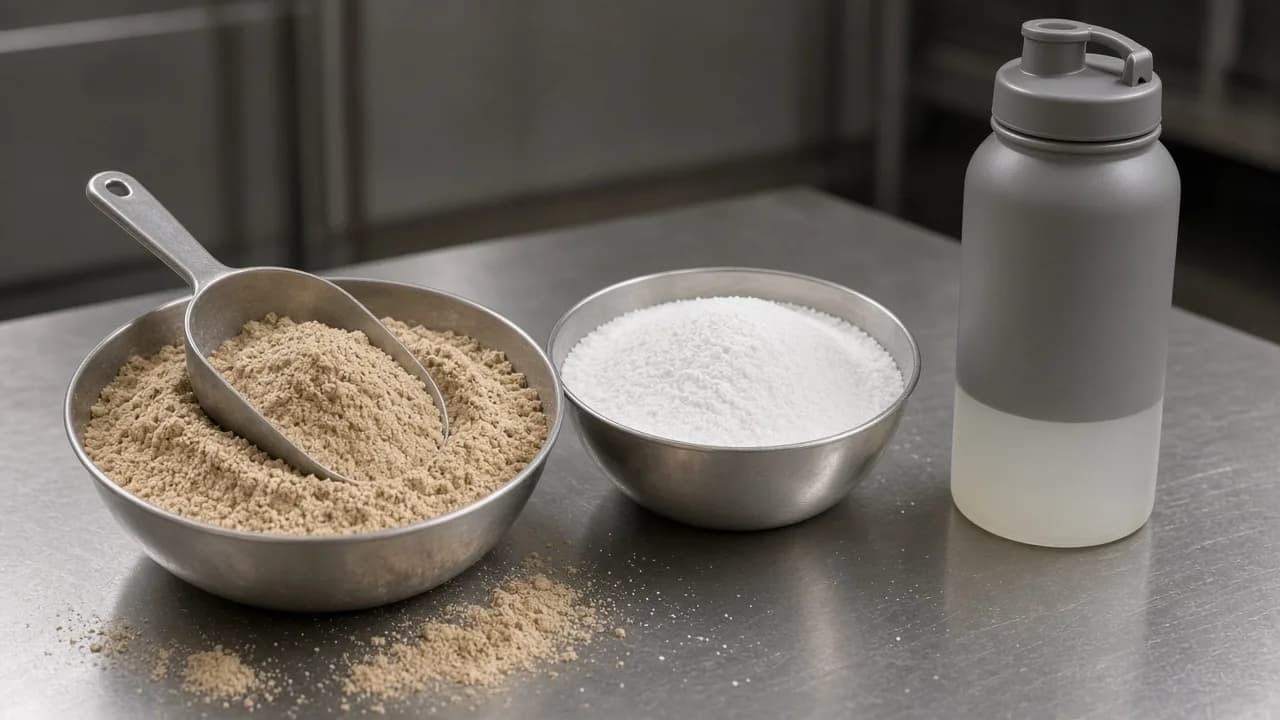
Carbohydrates supply fuel for the session. Electrolytes replace minerals and carry the hydration. They can share a sports drink. The brief still has to say which job comes first.
For a buyer the split is practical. One path is a hydration product that may carry a little carbohydrate. The other is a fuel product that also carries electrolytes.
When hydration comes first
Start with the electrolyte profile: sodium level, the other minerals, flavour, and how the drink is used. If carbohydrate is included, keep it light. Enough to round the taste, or to add a small amount of energy. The product stays a hydration product.
These drinks are sold as electrolytes or hydration. Athletes pick them for the minerals, and because they can finish them around training.
When fuel comes first
A fuel drink starts with the carbohydrate: the type, the amount, and sometimes the ratio. Glucose and fructose sources are often combined for longer efforts. Electrolytes still belong in the bottle, sodium in particular. They sit with the fuel. They do not replace it.
This is the same territory as high-carbohydrate drink mixes and carb loaders. If the brief is about grams of carbohydrate per hour, the product is endurance fuel that also includes minerals. It is not a classic electrolyte stick.
Why the main job changes the brief
The main job sets serving size, sweetness, how the drink feels in the mouth, flavour strength and the pack. A light hydration stick with a little carbohydrate drinks differently from a bottle with 60 to 90 g of carbohydrate for a long ride.
It also sets the words on the pack. A heavy carbohydrate mix needs fuel language. A light electrolyte stick needs hydration language. Mixed names confuse the athlete.
The middle that satisfies neither
A request for electrolytes plus a large amount of carbohydrate, with no main job, often lands in between. Too sweet for a daily hydration stick. Too light for serious endurance fuel.
Carbohydrate sources are not interchangeable. Maltodextrin, Cluster Dextrin (HBCD) and dual-source ratios feel different in the mouth and read differently on the shelf. Those choices belong in a brief where fuel comes first. In a light hydration product they stay secondary.
How to write it down
Name the main job in one sentence. A hydration stick with light carbohydrate for gym sessions. Or bottle fuel for long rides, with electrolytes alongside. Then add mineral targets, carbohydrate grams where they matter, flavour and format.
If hydration comes first, keep the carbohydrate modest unless you deliberately move the product toward fuel. If carbohydrate fueling comes first, treat the electrolytes as part of that fuel drink. The conversation then sits with high-carbohydrate mixes and carb loaders, including carbohydrate ratios when they are part of the brief.
Name the main job when you ask us to make it. We set minerals, carbohydrate level, flavour and format from there.
Related products
Related articles
Intra-Workout & Endurance Fuel
What is a high-carb drink mix / carb loader?
A high-carb drink mix, often called a carb loader in brand briefs, is a powder that puts a large carbohydrate dose into a drink for endurance use.
7 min
Intra-Workout & Endurance Fuel
What does a 1:0.8 carbohydrate ratio mean?
A 1:0.8 carbohydrate ratio is a glucose-to-fructose split used in endurance carbohydrate drinks. It describes how the two sources share a serving. It is not a name for maltodextrin or Cluster Dextrin.
7 min
Hydration & Electrolytes
Daily Hydration vs Performance Hydration
Daily hydration and performance hydration are different products. One is lighter and made for ordinary days. The other is made for long sessions or heavy sweating. No single dose covers both.
7 min