
Knowledge Base/Intra-Workout & Endurance Fuel
What is a high-carb drink mix / carb loader?
A high-carb drink mix, often called a carb loader in brand briefs, is a powder that puts a large carbohydrate dose into a drink for endurance use.
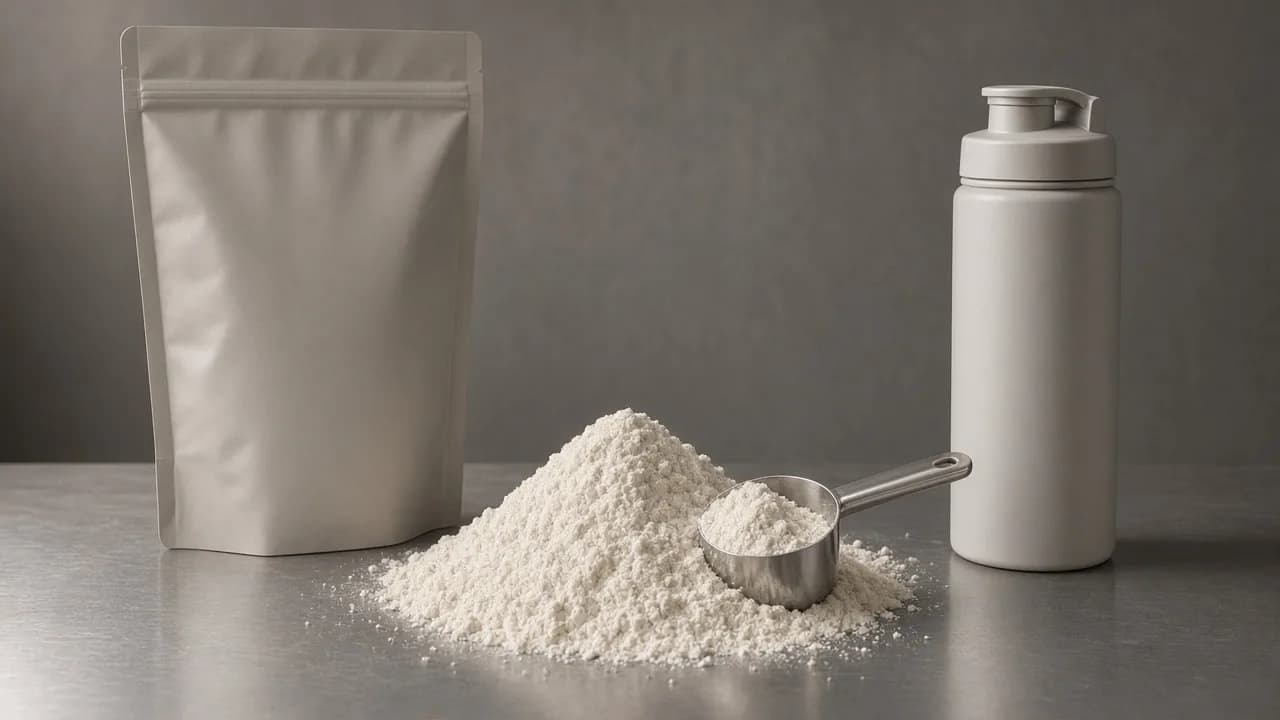
A high-carb drink mix, often called a carb loader in brand briefs, is a powder built to deliver a large carbohydrate dose in a drink. It is a fuel product for endurance use. Sources, grams per serving, electrolytes and flavour follow the brief. There is no single fixed recipe behind the name.
What high-carb means in practice
In manufacturing, high-carb means carbohydrate delivery is the main job. It is not a little sweetness in the background of an amino or electrolyte drink. Servings are usually much larger than a typical hydration or amino scoop. Brands often ask for tens of grams of carbohydrate per serving, scaled to session length and to how many bottles the athlete will drink.
Carb loader is brand language. It is not a regulated product name. Some teams use it for race-day fuel. Others use it for any high-carbohydrate powder sold for endurance. The brief needs the carbohydrate dose, when the drink is used, and how it should mix and taste across a long session.
That range is useful in one manufacturing conversation: a powder used in place of a race gel, a bottle mix for long rides, or a higher-dose training drink. The brief still has to name the dose and the use.
Where endurance brands use them
These mixes show up most often in cycling, triathlon, long runs, mixed efforts such as HYROX, and team sports with long matches or training blocks. The shared point is session length and energy demand. A light hydration drink is not enough fuel on its own.
Some brands keep electrolytes low and let carbohydrate lead. Others put a meaningful amount of sodium in the same drink. Both are sound product ideas. They are different briefs. A hydration stick with a few grams of carbohydrate is not a carb loader because it tastes sweet.
What belongs in the brief
Start with carbohydrate grams per serving, and with how many servings per hour the brand recommends. Then name the sources: maltodextrin, glucose, fructose, Cluster Dextrin (HBCD), or a blend. Say if a glucose-to-fructose ratio such as 1:0.8 is part of the product. Add electrolyte targets if sodium and other minerals sit in the same scoop.
Mixing and flavour matter more here than in many other products. A high carbohydrate load changes mouthfeel and sweetness. A flavour that works in a 5 g electrolyte stick can fail in a serving of 60 to 90 g of carbohydrate. Pack follows use. Large pouches and tubs are common for multi-serve endurance products. Single-serve packs are possible when the commercial case supports them.
Label language should match the formula. If it is a high-carbohydrate endurance drink, say so. If electrolytes are secondary, do not present it as a hydration stick. Clear category language keeps the buyer, the athlete and manufacturing on the same product job.
Common mistakes
Treating carb loader as one universal SKU, when it is a family of briefs. Copying a hydration flavour into a high-carb scoop without tasting it at full dose. Asking for a speciality carbohydrate line before deciding if dose, ratio or the named ingredient is the real priority. Mixing intra-workout marketing with an endurance fuel brief until neither the amino job nor the carbohydrate job is clear.
What this means in manufacturing
Sports Nutrition Co. builds high-carbohydrate drink systems from the brief: sources, dose, electrolytes, flavour and pack. Carb loader is not a stock formula name here. If the brief includes Cluster Dextrin (HBCD), a dual-source ratio or a set electrolyte profile, those points are confirmed project by project. The product is clarified first, then made to an agreed specification.
Related products
Related articles

Intra-Workout & Endurance Fuel
What is Cluster Dextrin / HBCD?
Cluster Dextrin is highly branched cyclic dextrin (HBCD), a carbohydrate ingredient used in endurance and intra-fuel drinks. It is a raw-material choice, not a different kind of carbohydrate.
8 min
Intra-Workout & Endurance Fuel
What does a 1:0.8 carbohydrate ratio mean?
A 1:0.8 carbohydrate ratio is a glucose-to-fructose split used in endurance carbohydrate drinks. It describes how the two sources share a serving. It is not a name for maltodextrin or Cluster Dextrin.
7 min

Hydration & Electrolytes
Electrolytes + Carbohydrates
Carbohydrates supply fuel. Electrolytes replace minerals. They can share a bottle if the brief says which job comes first.
7 min