Knowledge Base/Product Development
Protein pancake formulation
A protein pancake mix is a dry batter that must hydrate, spread, brown and hold in the pan. Protein, starch, leavening and flavour all have to work as food, not as a shake poured onto a hot plate.
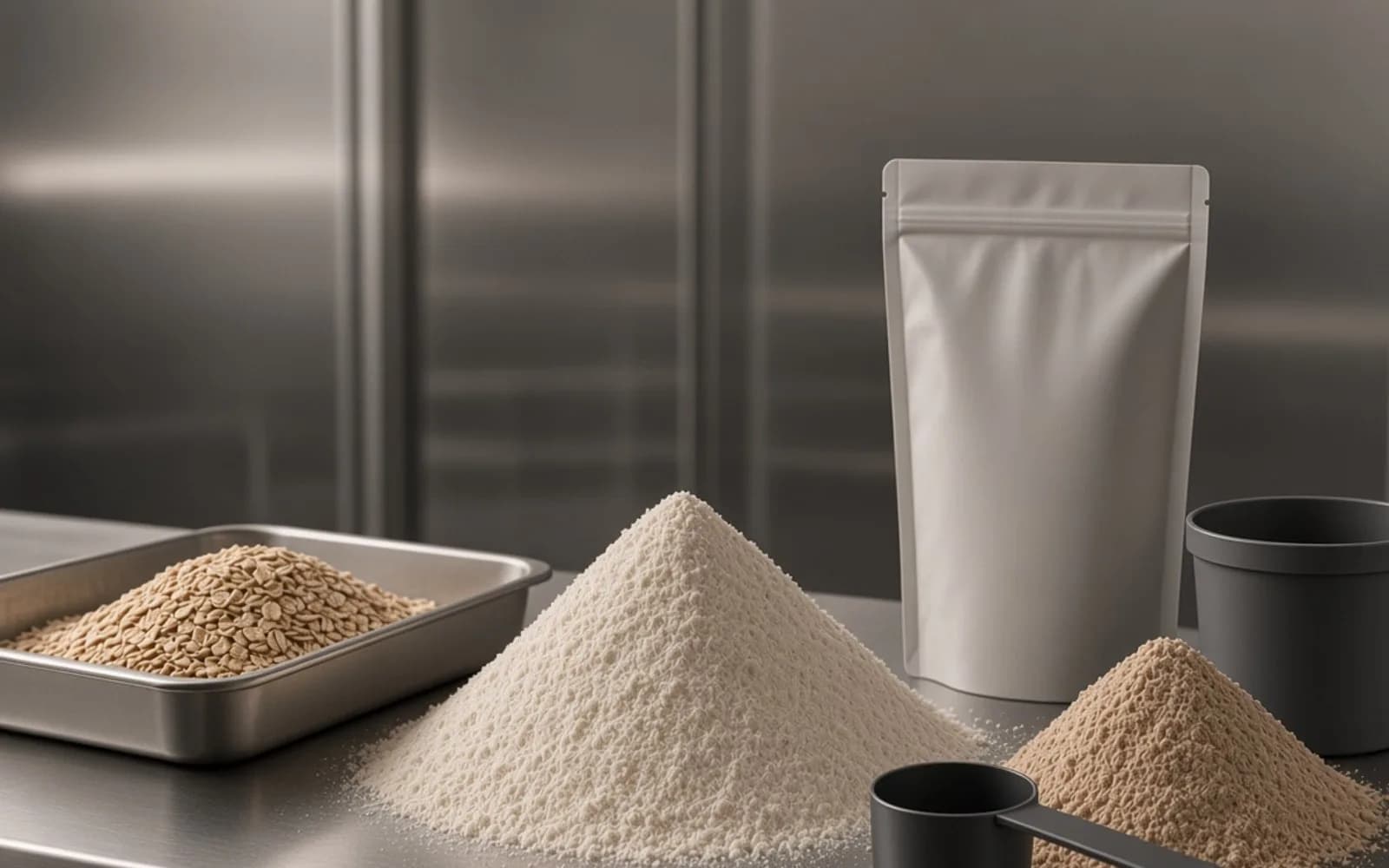
A protein pancake mix is a dry blend you mix with water or milk, then cook in a pan or on a griddle. Success is a stack that browns, flips and eats like a pancake. Failure is a rubber disc, a slurry that will not set, or a powder that only works if the customer already knows how to rescue batter. The formula is food manufacturing. It is not a whey shake with baking powder stirred in.
Sports brands sell it as a breakfast or a simple meal around training. The customer compares it with oats, cream of rice and a protein shake. If the mix needs a blender, three eggs and a rest in the fridge, you have left the category. Keep prep on the pack: liquid, mix, pan, time.
Protein that still cooks
Whey concentrate, a mild whey blend, milk protein or a plant cut can all work. High isolate alone often makes a tight, dry cake unless starch and a fat or egg powder help. Hydrolysate is a poor default: bitter, expensive, and eager to brown too fast. Plant pancakes need more starch and flavour cover. They can still work. They will not drink like a pea shake and then magically become a crêpe.
Protein grams per serving are a commercial target, not a trophy. Past a point the batter binds, the crumb goes rubbery, and reviews mention chewing. State the grams you want on the nutrition table and the number of pancakes that serving should make. We will tell you if those two numbers fight.
Starch, leavening and the pan
Starch (often a wheat, oat, rice or maize fraction, depending on the gluten story) gives spread and crumb. Without it, protein pancakes sit like omelettes. Leavening (baking powder systems) gives lift. Too little and the cake is dense. Too much and you taste metal and see tunnels. Fat powder, whole egg powder or a fibre can help tenderness. Each one changes allergen labelling and cost.
We cook the brief. Spread in a pan, colour at a normal hob setting, flip without tearing, hold on a plate for a few minutes. A mix that only works on a greased professional griddle at a trade show is not a consumer SKU. Tell us if the customer uses water or milk, and whether gluten-free is a hard rule. Those two facts change the starch set more than a flavour name does.
Flavour, serving and pack
Vanilla, chocolate, cinnamon and banana are the usual set. Heat changes flavour. A cold batter taste is not the finished product. Sweetness should survive the pan without tasting like a protein bar melted on a hob. Inclusions (chips, pieces) are a separate manufacturing conversation: they scorch, they sink, and they change how the mix fills a pouch.
Print a serving as a number of pancakes plus the dry grams, not only “one scoop”. Pouches and tubs start at 300 finished units per product and flavour. That is 300 packs, not 300 pancakes. Sachets or sticks, if you want a single-serve batter, start at 5,000 finished units. A family pouch is the usual first SKU.
What we need in the brief
Allergen and claim text follow the starch and protein you chose. A wheat-based mix is not a gluten-free SKU with a small print apology. An egg powder for tenderness is an egg allergen. Sweetener systems that work in a cold shake can taste metallic after browning. We sign flavour off on a cooked pancake, with the liquid the pack will print.
Name protein grams, pancake count per serving, gluten-free or not, water or milk, flavour, and pouch or tub. Say if egg powder is acceptable. Configure the protein direction in the protein builder. We cook samples against that specification and quote manufacturing when the pan behaviour is repeatable.
Related products