
Knowledge Base/Product Development
How cream of rice products are formulated
Cream of rice is a hot bowl product: a fine rice base, optional protein, flavour and a texture that cooks in a few minutes. It is a carbohydrate food in sports nutrition, not a whey tub with rice written on the front.
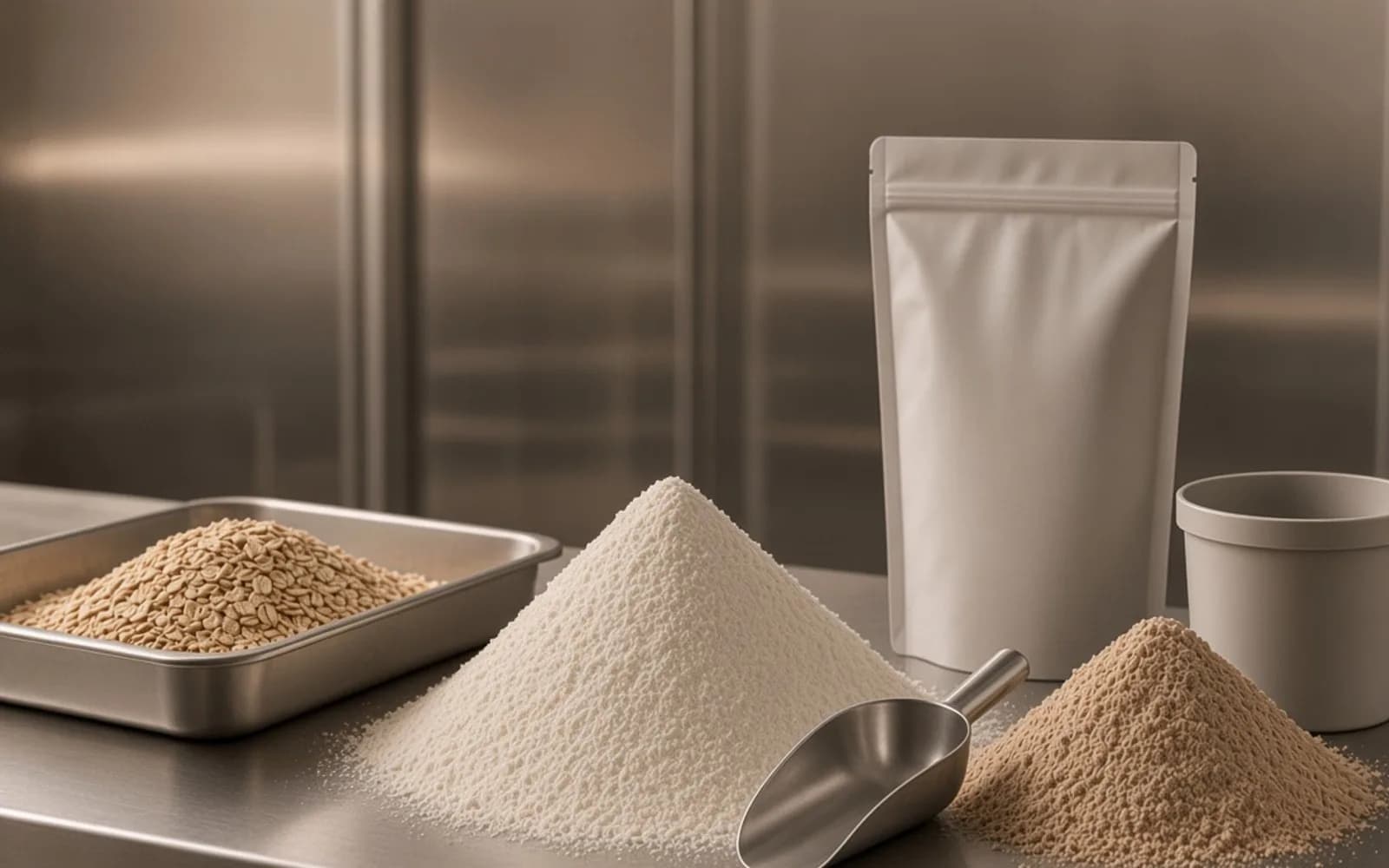
Cream of rice is a dry mix that becomes a hot porridge when you add water or milk and cook it. The rice fraction is the product. Flavour and protein sit on top of that base. It is not a dessert whey with a spoonful of rice starch, and it is not baby cereal with a sports label glued on.
Sports brands use it as a carbohydrate meal around training: breakfast before a session, a simple bowl when an athlete wants rice rather than oats, or a flavoured option that still looks like food. The job is fuel and repeatable prep. The job is not a high-stim drink and not a meal-replacement claim.
The rice base comes first
Grind size sets cook time and bowl thickness. Too coarse and the bowl stays watery with hard grains. Too fine and it turns pasty in the pan. Most sports SKUs use a fine, even rice flour or cream-of-rice cut that thickens in a few minutes on the hob or with a kettle-and-stir method if the brief asks for that. The rice type (white, a named variety) is a brand choice. It also changes colour, aroma and how the finished label reads.
Unflavoured rice is a real SKU. Athletes season it themselves, or brands sell it as a clean carbohydrate bowl. Flavoured lines carry vanilla, chocolate, cinnamon, banana or a dessert note. Sweetness has to survive heat. A flavour that works in a cold shake can collapse when the bowl sits hot for five minutes. We taste cooked, not only dry powder.
Protein-enriched bowls
Protein can be added when the bowl still cooks and spoons. Whey, milk protein or a short blend are the usual dairy options. Plant protein is possible. It thickens faster and can taste beany once heated. The constraint is texture, not a number on a moodboard. Push protein too high and the mix sets like glue, skins on cooling, or refuses to hydrate in the middle of the bowl.
A protein-enriched cream of rice is still a rice product. The nutrition table should look like a bowl: carbohydrate first, protein as a stated add. If you want a 30 g protein shake that happens to contain rice flour, make a protein powder. Do not force that brief into a porridge format and then complain that it will not cook.
Serving, prep and branding
Print a serving that fills a normal bowl. Under-scooping looks cheap. Over-scooping makes a brick. State water or milk volume, hob versus kettle, and rest time. Athletes repeat the same breakfast. If two scoops one day and three the next change the cook, the product feels inconsistent even when the powder is fine.
Branding can stay close to food: a named rice, a kitchen flavour, a clear carbohydrate number. Or it can sit in a performance line next to oats and pancake mix. Either way, the pack photo should look like a bowl someone would eat. Glossy shake imagery on a porridge SKU confuses the shopper and lands the wrong reviews.
Pack and order quantity
Pouches and tubs are the usual packs. Both start at 300 finished units per product and flavour. That is 300 pouches or 300 tubs, not 300 bowls. Sticks or sachets are a different manufacturing run: 5,000 finished units. A single-serve sachet makes sense for travel or a sample box. It is a poor default for a family-size breakfast SKU.
A brief that only says “cream of rice, high protein, dessert flavour” will stall. We need cook method because kettle-and-stir and hob-and-simmer are different hydrations. We need a protein ceiling because the bowl has to spoon. We need sweet or plain because those are different flavour systems. Configure the SKU in the protein builder when those points are named, then take a manufacturing quote on that specification.
Name rice type, flavoured or plain, protein grams if any, cook method, serving weight and pack. We set the grind and the flavour against a cooked bowl, then you can configure the SKU in the protein builder and take a manufacturing quote on that specification.
Related products
Related articles
Product Development
Protein pancake formulation
A protein pancake mix is a dry batter that must hydrate, spread, brown and hold in the pan. Protein, starch, leavening and flavour all have to work as food, not as a shake poured onto a hot plate.
5 min
Manufacturing / Regulatory
Complete meal vs meal replacement
A complete meal powder and a meal replacement are different commercial and legal jobs. One is a balanced shake a brand can sell as a convenient meal-style serving. The other follows meal-replacement rules in the target country. They are not interchangeable names.
6 min